the iPhone 16 Pro Max is Apple’s latest superphone, with a massive screen, the fastest chip and the most advanced cameras on an iPhone, ready to be your entertainment powerhouse, if you can squeeze it into a pocket or bag.
This enormous iPhone comes at an equally huge price. Starting at £1,199 (€1,449/$1,199/A$2,149) the 16 Pro Max tops the iPhone 16 series, towering above the £999 16 Pro and £899 16 Plus, though, at least it comes with double the starting storage of the rest.
Unlike their predecessors, the 16 Pro and Pro Max have matching cameras, chips and capabilities, providing a choice of size between a relatively compact 6.3in screen and the biggest ever fitted to an Apple phone.
The 16 Pro Max (left) dwarfs the 16 Pro (right) but both phones have the same quality
One of the most important changes in Samsung’s new phones is a simple one: when you long-press the side button on your phone,
instead of activating Samsung’s own Bixby assistant by default, you’ll get Google Gemini.
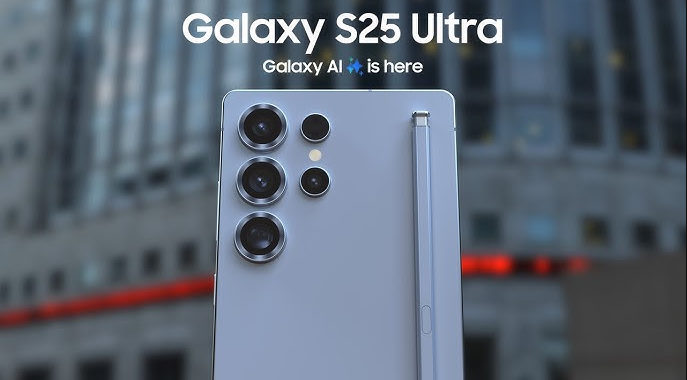
The Galaxy S25 Ultra, announced today, sheds more ofits Note rootsthis year with rounded
corners and flat edges that align it more with the rest of the S series. It comes with Qualcomm’s latest chipset, an upgraded ultrawide camera, and not much else, hardware-wise. With no price increase over last year’s model —starting at $1,299
— it’s a light refresh of Samsung’s biggest phone, with a major emphasis on One UI 7.0’s AI upgrades.
Something about the shift from curved edges to flat sides makes the S25 Ultra look hefty in photos, like if the Cybertruck were a phone. But it’s actually slightly smaller and lighter than last year’s device, even with a bigger 6.9-inch screen thanks to slimmer bezels. It’s equipped with a Snapdragon 8 Elite processor tuned for Galaxy devices — that’s true for all S25-series phones sold in all regions, which hasn’t been the case recently. And it still comes with one more strong spec: seven years of OS updates and security patches.
Samsung rounded out the pointy, uncomfortable corners on the S24 Ultra and flattened the edges. Photo: Allison Johnson / The Verge
There are some interesting things not on the Ultra
Nvidia’s RTX 4090 was a beast of a graphics card. It was a huge GPU
that delivered true 4K gaming for those who really wanted it and a huge jump in performance over
the previous-generation RTX 3090. Naturally, the company’s latest
top-of-the-line GPU, the GeForce RTX 5090, now has a lot of expectations
riding on it when it arrives on January 30th.
But at $1,999, the RTX 5090 is steep — $400 more than the RTX 4090 Founders
Edition at its launch. (It could run you even more in the form of a new
power supply or higher electricity bills, especially if you want to run
games like Cyberpunk 2077 in 4K.)
For those extra dollars, you’re getting hardware improvements in the form of
32GB of VRAM and a redesigned Founders Edition card that’s shrunk down
enough to fit inside a small form factor PC. But the greatest benefit might
actually be in the software: the RTX 5090 is the first Nvidia GPU with
access to the new DLSS 4 Multi Frame Generation, which promises huge frame
rate increases. We’re talking frame rates not just quadrupling but
increasing by more than 8x in some cases.
That extra processing power naturally translates to better performance,
making the RTX 5090 the new king of 4K gaming. It’s a $1,999 GPU for anyone
who wants the best 4K gaming experience, developers interested in AI
performance, and creators who want to accelerate video editing.
But the RTX 5090 isn’t as big an improvement over the RTX 4090 as that
previous-generation card was over the RTX 3090, especially in games that
don’t yet support DLSS 4 Multi Frame Gen. While it’s still a little too
early to tell how widely developers will adopt Nvidia’s latest DLSS tech, I
think it may turn out to be a lot more important than the actual hardware
itself.
When I first unboxed the RTX 5090, I was surprised at how small the Founders
Edition card was. Although the new GPU is still as long and wide as an RTX
4090, it’s nowhere near as thick. Where the 4090 Founders Edition took up
three slots and then some, the two-slot 5090 is so slim it will fit inside
small form factor PCs, giving people much more flexibility this time around.
Nvidia has moved to three DisplayPort 2.1b ports and a single HDMI
2.1b port at the rear.
The angled power connector on the RTX 5090.
Nvidia’s power dongle for the RTX 5090 includes four regular PCIe
eight-pin power connectors.
The key to the two-slot design is a new cooling system. For the Founders
Edition card, Nvidia moved to double flowthrough fans that suck cooler air
from below and exhaust it above the RTX 5090 into the rest of the case,
rather than out the top and back of the card. The PCB moves to the center of
the card, with heat pipes going out in both directions that get cool air
from this new fan layout.
The RTX 5090’s power connector is slightly angled to make it easier to fit
into cases where the side panel comes close to touching the GPU power cable.
Nvidia bundles a dongle power adapter that uses four regular PCIe eight-pin
power connectors, much like the adapter for the RTX 4090, though the cables
are slightly more flexible this time. This new GPU supports an updated
12V-2x6 connector that has shorter sensing pins and slightly longer
conductor terminals, but existing 12VHPWR connectors will work fine with the
RTX 5090, so you don’t need to swap anything for a new cable.
Nvidia recommends a 1,000-watt power supply because the RTX 5090 can draw a
massive 575 watts of power — 125W more than the RTX 4090. The 12VHPWR cables
are rated at 600 watts, so there’s little room for overclocking. I was
hoping that Nvidia’s RTX 50 series would focus more on efficiency rather
than push the power draw even higher, especially as the RTX 4090 was already
a big jump from the 350W RTX 3090. It’s disappointing that power draw in
flagship GPUs has essentially reached the level of what a single cable can
deliver, and I sure hope whatever comes next doesn’t require two 12VHPWR
cables.
The RTX 5090 is a lot smaller than the RTX 4090.
4K and DLSS 4
For both my 4K and 1440p testing, I’ve paired Nvidia’s RTX 5090 with AMD’s
latest Ryzen 9 9800X3D processor and Asus’ 32-inch 4K OLED PG32UCDP monitor.
That monitor is the perfect companion for the RTX 5090: the 240Hz refresh
rate is more than sufficient for the frame rates the card can achieve at
1440p, and games look fantastic on an OLED panel with HDR enabled.
I’ve put the RTX 5090 head-to-head with the RTX 4090 and AMD’s closest
competitor, the RX 7900 XTX, to see how Nvidia’s latest Blackwell architecture — which is a combination of hardware and software support
improvements — performs across a variety of games. I’ve tested the latest
titles like Black Myth: Wukong, Call of Duty: Black Ops 6, Assassin’s Creed Mirage, and some of the usual choices like Cyberpunk 2077, Metro Exodus Enhanced, and even Shadow of the Tomb Raider.
These games were all tested at very high or ultra settings on the RTX 5090,
with a variety of ray tracing and upscaling options in games that support
them, as well as games without DLSS or ray-tracing support.
Test machine:
CPU: AMD Ryzen 9 9800X3D
CPU cooler: Corsair H150i Elite LCD
Motherboard: Gigabyte Aorus Master
RAM: 32GB G.Skill DDR5-6000
Storage: Samsung 970 Evo Plus 2TB
PSU: Corsair HX1000W
Case: Streacom BC1 V2 open benchtable
The star of the 4K show here is DLSS 4 and Nvidia’s new Multi Frame Generation technique that can generate up to three additional frames per every
traditionally rendered frame. It uses the latest AI graphics models, powered
by an updated transformer architecture that’s similar to what’s found in
ChatGPT to multiply frame rates beyond what a GPU is normally capable of.
Essentially, the Tensor cores in the GPU take the rendered frame, figure out
what the next one to three frames should look like, generate them, and insert them before the next rendered
frame. It’s how Nvidia can promise big frame rate increases in games
like Cyberpunk 2077 at 4K with full ray tracing enabled.
Nvidia is really selling the RTX 50-series on this new Multi Frame Gen
technology as a result, and some of its marketing has already reignited the
long-running “fake frames” argument about DLSS Frame Generation. Some PC gamers have argued that this
technique, which Nvidia introduced originally with DLSS 3, is not reflective
of the true performance of GPUs.
I think this debate will run for the entirety of this generation of GPUs,
but with more than 80 percent of RTX owners enabling DLSS in games already, they’re likely to move
to Frame Generation if they upgrade to the latest Nvidia cards.
Most of the real issues with DLSS Frame Generation come down to the impact
of latency and image quality. Instead of the Convolutional Neural Networks
(CNN) model used in previous versions of DLSS, Nvidia has switched to a new transformer model for DLSS 4. This means frame generation models are faster and use less VRAM. The
switch also fixes some of the image ghosting and weird artifacts we’ve seen in Cyberpunk 2077, and it does all of this while massively improving frame rates with Multi
Frame Gen and only adding a minuscule 6ms more latency.
That feels like a good tradeoff to me, but Multi Frame Generation works best
when the frame rate after Super Resolution upscaling is already decent.
Super Resolution is another DLSS feature that helps improve frame rates and
reduce input latency by rendering at a lower resolution and using AI to
upscale to the output resolution. For example, a game that would render at
27fps in 4K with DLSS turned off might play at 60fps with Super Resolution.
Multi Frame Generation can bump that to 200fps and greatly improve the
motion clarity, but it will still feel like 60fps because it’s not the same as the reduced input latency benefits
that 200fps rendered traditionally would deliver.
Multi Frame Gen massively improves frame rates in Cyberpunk 2077.
Nvidia supplied early DLSS 4-compatible builds of Cyberpunk 2077 and Alan Wake 2 for testing, and I focused most of my Multi Frame Gen testing on Cyberpunk 2077. While the game is over four years old, developer CD Projekt Red still
manages to add the latest upscaling and ray-tracing techniques into Cyberpunk 2077 on a regular basis, pushing modern GPUs to the max to get path
tracing running. That makes it a popular choice for benchmarking and image
analysis.
At 4K resolution, with full path tracing, ultra settings, and no DLSS
upscaling or frame generation, Cyberpunk 2077 ran at just 34fps. That’s nearly 42 percent faster than an RTX 4090,
but you really need Super Resolution and Multi Frame Generation here to help
the game get way above 60fps with everything cranked up. That shows you how
important software improvements have become in modern GPUs, and while DLSS 4
won’t settle the debate about “fake frames,” the improvement it brings is
undeniable.
You can also choose from 2x Multi Frame Gen (DLSS 3 Frame Generation) all
the way up to 4x Multi Frame Gen. I took the 34fps fully path traced version
of Cyberpunk 2077 to a massive 371fps with DLSS ultra performance, 4x Multi Frame Gen,
and the CNN model. If you opt for the Transformer model, you can avoid the
image ghosting issues of CNN and still get 211fps at DLSS quality mode and
4x Multi Frame Gen, without needing to drop down to the DLSS performance
modes that offer less image quality. That’s more than six times the base
34fps. I think it’s worth the very small performance tradeoff to stick to
Transformer in Cyberpunk 2077.
Most of my 4K testing was performed without DLSS 4 Multi Frame Gen, simply
because most developers haven’t updated their games yet. While the company
is promising more than 75 games and apps will upgrade to DLSS 4 Multi Frame
Gen when the RTX 5090 launches on January 30th, some, like Black Myth: Wukong, won’t be upgraded until later this year. If you really can’t wait for
developers to update their games, there will be an option to force DLSS
Multi Frame Gen inside games through the Nvidia app.
1/9
FSR 2 does a good job of lifting framerates with the RTX 5090
in Assassin’s Creed Mirage.
Still, not everything here is about software improvements. Without DLSS or
Frame Gen involved, the RTX 5090 was, on average, 28 percent faster than the
RTX 4090 at 4K. That’s still nowhere near as big of a jump as I saw between
the last two RTX generations, but it’s better than the RTX 5090 is capable
of at 1440p.
The RTX 5090 managed more than 60fps at 4K in every game I tested,
with Black Myth: Wukong being the most demanding at 62fps on the RTX 5090 compared to 47fps
on the RTX 4090. DLSS managed to bump this up to 95fps without Frame Gen
involved.
I saw the biggest performance improvements in Cyberpunk 2077 at 4K, with the RTX 5090 delivering 43 percent higher frame rates
over the RTX 4090 at ultra settings without DLSS or ray tracing involved. If
you compare the RTX 5090 to AMD’s $999 Radeon RX 7900 XTX, then the
performance gap is a massive 70 percent but at double the price.
Forza Motorsport also ran 35 percent better on the RTX 5090 than the RTX 4090 using temporal
anti-aliasing (TAA), and I even managed to hit 238fps on average in Shadow of the Tomb Raider at 4K on the RTX 5090.
I also ran some AI and video workloads on the RTX 5090 just to get a taste
for what it’s capable of over the RTX 4090. The RTX 5090 was around 12
percent faster than the RTX 4090 in PugetBench’s DaVinci Resolve test, and
in Procyon’s AI XL (FP16) test, it was 40 percent faster.
1440p benchmarks
At 1440p resolution, the RTX doesn’t deliver as much of a performance
benefit as at 4K. Black Myth: Wukong is one of the more demanding PC games right now, and it’s the only one
where the RTX 5090 failed to deliver more than 100fps at 1440p without the
help of FSR or DLSS. Enabling DLSS at 75 percent in Black Myth: Wukong bumped the RTX 5090 performance to nearly 120fps — closer to making
use of a 144Hz monitor — but it’s only 17 percent more than the RTX 4090.
Horizon Zero Dawn averaged 200fps on the RTX 5090 with very high settings and just TAA
enabled. That’s only 13 percent more than the RTX 4090 managed with the same
settings. Returnal also ran 19 percent faster without DLSS on the RTX 5090 than the RTX
4090, and it’s a similar story in Call of Duty: Black Ops 6, where the RTX 5090 reached nearly 200fps without DLSS, about 15 percent
more than the RTX 4090 delivered.
The most disappointing result was Assassin’s Creed Mirage, where the RTX 5090 only managed 8 percent better performance than the
RTX 4090.
1/9
The RTX 5090 nearly maxes out a 240Hz monitor in Assassin’s
Creed Mirage with FSR upscaling.
Cyberpunk 2077 and Forza Motorsport are rare examples of the RTX 5090 delivering more than a 30 percent
performance gain over the RTX 4090 at 1440p. Without DLSS enabled, the RTX
5090’s lead over the 4090 at 1440p is about 18 percent on average — a lower
jump overall than the last generation, which saw the RTX 4090 beating the
RTX 3090 by over 40 percent in multiple titles.
DLSS 4’s Multi Frame Gen feature will obviously help out at 1440p, too, but
out of my test suite of games, only Cyberpunk 2077 had support for it ahead of launch, so I focused my Multi Frame Gen
testing at 4K.
At $1,999, I don’t think many people will be picking up an RTX 5090 just for
1440p, but if you’re considering it, then it might be worth seeing how the
upcoming RTX 5080 performs at this resolution.
The RTX 5090’s fans cool down this card when you’re pushing it to the
limits.
Power draw, fans, and heat
While DLSS Multi Frame Gen is showing promising early results, I’ve been far
less impressed with the RTX 5090’s power draw. I managed to get it to peak
at 578 watts during a 3D Mark Time Spy Extreme 4K benchmark. Even
in Cyberpunk 2077 with full ray tracing and no DLSS, it peaked at 569 watts and hovered
regularly above 500 watts. The same test on the RTX 4090 peaked at 427
watts. The extra power draw is really disappointing from this generation — I
was hoping for a lot more efficiency from Nvidia’s latest chips.
Even without ray tracing in Cyberpunk 2077, the RTX 5090 averages 477 watts of power draw. Power consumption will
vary by game, but in titles where you’re really pushing it, it’s going to
want 500 watts or more. I was hoping for more efficiency here and for the
RTX 5090 to draw less power than the previous generation in games
like Cyberpunk 2077. In something like Valorant, it’s obviously going to draw less than 200 watts, but most non-pros aren’t
spending $1,999 on a GPU just to play esports titles.
You’ll want to invest in at least a 1,000-watt power supply for the RTX 5090
or even beyond that to give you room for future upgrades. This extra power
draw will also have an impact on your electricity bills, particularly if
you’re in a country like the UK where utility prices have skyrocketed in
recent years.
While the power draw is disappointing, at least I didn’t notice any
immediate heat issues during my testing of the RTX 5090. It hit a maximum of
70 degrees Celsius (158 degrees Fahrenheit) in an open test bench, with the
fans reaching 1,500rpm during the Cyberpunk 2077 testing. The RTX 4090 hit 64C in the same test. The RTX 5090 is a
relatively quiet card, and it still has a zero-rpm mode like the previous
RTX 4090, where the fans stop spinning when you’re idle or not touching the
GPU much. It can get as high as 50C (122F) while idle in this zero-rpm mode,
though, and then the fans kick in again to cool the card down to a more
reasonable 30C (86F) idle temperature. I don’t have a small form factor case
to test the RTX 5090, but I’d imagine you’ll have to think carefully about
cooling in a more enclosed case.
I haven’t run into many issues with the RTX 5090, but I did notice a few
games crashing randomly on the pre-release drivers. Valorant often fails to launch or just crashes before a game begins. The Finals refuses to load, with an error that appears to be anti-cheat related.
I don’t recall similar issues with previous generations of Nvidia GPUs, but
there could be other games that also crash or refuse to run with the RTX
5090 until developers and Nvidia fix the early issues.
The RTX 5090 is a flagship GPU unlike any other.
The RTX 5090 is undoubtedly a 4K king, but Nvidia hasn’t delivered the pure
performance gains here like it did with the RTX 4090. While DLSS 4 is a
boost to both image quality and Frame Generation performance that can’t be
ignored, I haven’t seen enough of Multi Frame Gen across a variety of games
to know how well it works in every situation. The early look at Cyberpunk 2077 is promising for the RTX 50 series, as long as other developers can
deliver similar performance gains without additional latency or issues along
the way.
Of course, you should never buy something hoping that software improves it
over time, but Nvidia has proven with DLSS in the past that its GPUs certainly do get better with age. I’m
willing to bet that DLSS 4 Multi Frame Gen will improve a lot more games
running on the RTX 50 series like it did with these early examples. DLSS 4
and its new transformer model are also arriving on existing RTX cards to improve image quality, and Nvidia has hinted we might even see
Multi Frame Gen eventually appear on older generations.
$1,999 is still a lot to pay for a GPU, even if it’s no more than the RTX
4090 ended up selling for in reality. Unfortunately, it doesn’t look like
AMD will even bother competing with the RTX 5090, and it’s still not clear
how its new AI-powered FSR 4 upscaling will compare to DLSS 4. Nvidia stands alone at the high end of the
GPU market right now, and $1,999 is the price to unlock the best that PC
gaming has to offer.
If this price or the power draw puts you off of the RTX 5090, Nvidia still
has the $999 RTX 5080 on the way — and the $749 RTX 5070 Ti and $549 RTX
5070 in February. On a pure performance basis, the RTX 5090 isn’t a
game-changer in the way the RTX 4090 was. But if enough developers adopt
DLSS 4, then this sleek GPU might well usher us into an era where software
improvements matter more than hardware alone.